
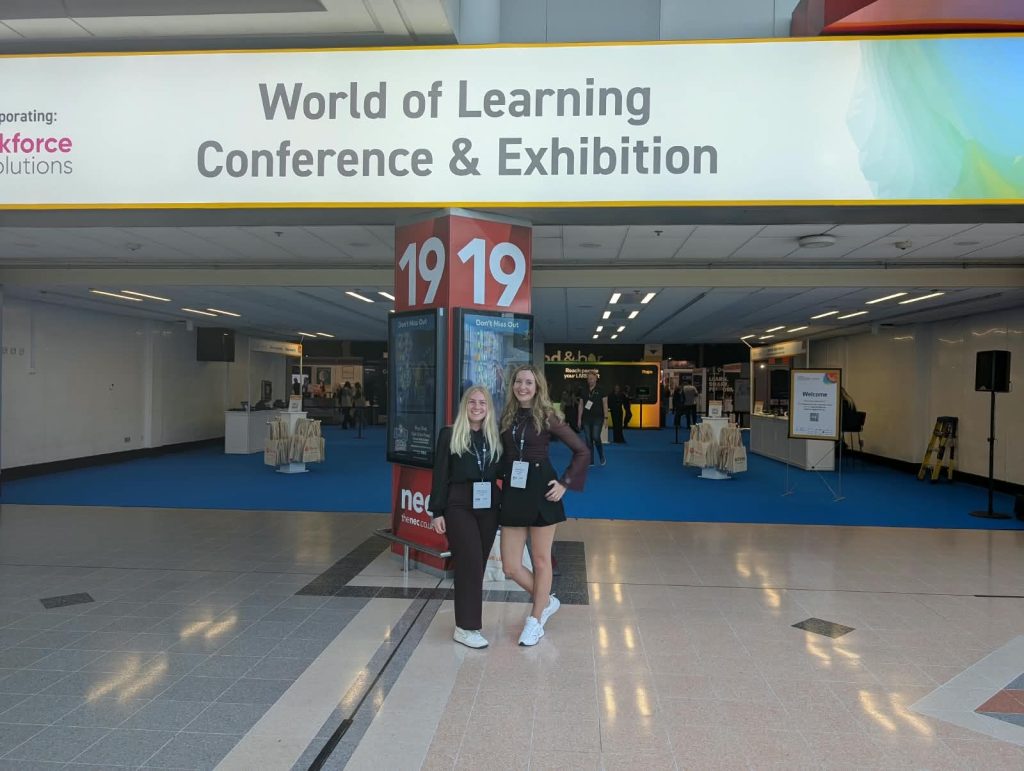
What Hannah and Hannah took away from World of Learning
Hannah Quinton and Hannah Johnston headed to World of Learning at Birmingham’s NEC this week. Two Hannahs certainly made introductions easy, but it was the questions about the future of learning content that stayed with us.
How do we help people find what they need? What happens when an AI summary becomes their first stop? And how do we stop treating content as a destination and shift towards content as infrastructure?
Make content easier to find
You can create a brilliant learning resource, but it can only help if people can find it when they need it.
One of our main takeaways was the importance of designing for that moment of need. Someone looking for help with a task might not know the name of a course, the department that owns it or where it sits in the learning platform. They know the question they need answered.
Content needs to be surfaceable quickly. With clear titles, tagging, machine-readable and well organised content can surface at the point of need.
When the summary becomes the first stop
AI summaries added another layer to that conversation.
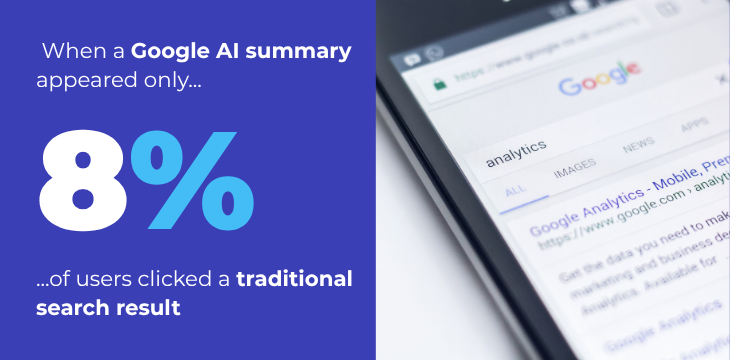
Pew Research Center’s analysis of US browsing activity in March 2025 found that, when a Google AI summary appeared, users clicked a traditional search result in just 8% of visits. That means 92% of people were happy the summary answered their question, and didn’t need to open the original content.
This is web search research, rather than a measure of workplace learning. But it raises an interesting question for L&D: are we designing learning experiences that reflect how people already look for answers in their day-to-day lives?
When someone needs help with a specific task, an immediate, relevant answer can be more useful than having to work through an entire course. Our content strategy needs to make room for that, while recognising when a fuller explanation, practice or human support will help someone move forward.
Blended learning has always recognised the value of different approaches. This takes that thinking further, with content becoming a connected source of knowledge that people can search, question and draw from in the moment.
It also changes what personalisation could look like. Recommendations based on someone’s job title are a starting point. The bigger opportunity is to respond to their situation, experience and goals.
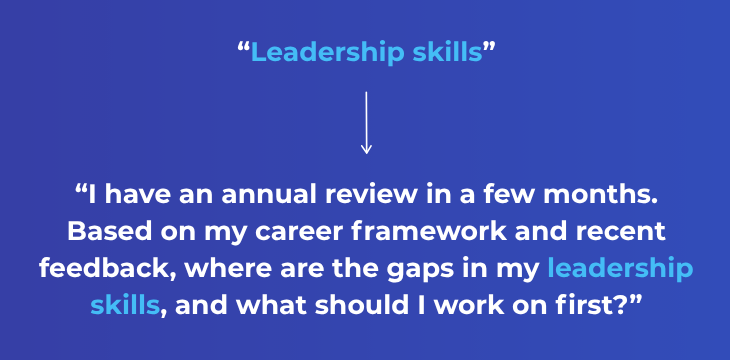
For example, a learner might once have searched for “leadership skills” and been presented with a list of courses. Now, their question might be“I have an annual review in a few months. Based on my career framework and recent feedback, where are the gaps in my leadership skills, and what should I work on first?”
With the right information and permissions in place, a useful response could help them identify development priorities, find relevant resources and suggest practical opportunities to build those skills. It could also help them prepare for a conversation with their manager.
That puts new demands on the content behind the answer. Personalised answers also need appropriate access to information and clarity about what they are based on.
For us, this brings the conversation to content as infrastructure….
Thinking of content as infrastructure
The course, resource or video remains valuable, but its knowledge may also need to support a search result, a summary or a personalised development plan.
The opportunity for L&D is to design for both: helping people find a useful answer quickly, and giving them a clear route into deeper learning when they need it.
Viewed this way, a resource has a life beyond its launch. It needs an owner, regular maintenance and a clear place in the wider knowledge environment. It should be possible to find, update and reuse the information without creating several competing versions.
The question becomes broader than “What should we build next?” We also need to ask, “How will this knowledge stay useful?”
Want to know more?
Making time for events like World of Learning is part of how we keep learning at GuyKat. Our purpose is to help organisations share knowledge at scale. Staying curious about how people find and use that knowledge is part of delivering on it.
- Learn more about our Content team
- See our upcoming events